Lice
The Narrow Road to the Deep NorthLice are a recurring material presence in the novel’s accounts of imprisonment and survival. In the POW camp they inhabit the bamboo sleeping platforms and accompany the men through overcrowding, exhaustion, and worsening illness. Their recurrence later connects that environment to Tenji Nakamura’s life among the ruins of Tokyo, where the former camp officer faces hunger and the threat of arrest. The insects do not explain the prisoners’ suffering, but make its conditions insistently physical: even rest and private space offer no escape from the camp’s deprivation.
In the crowded camp
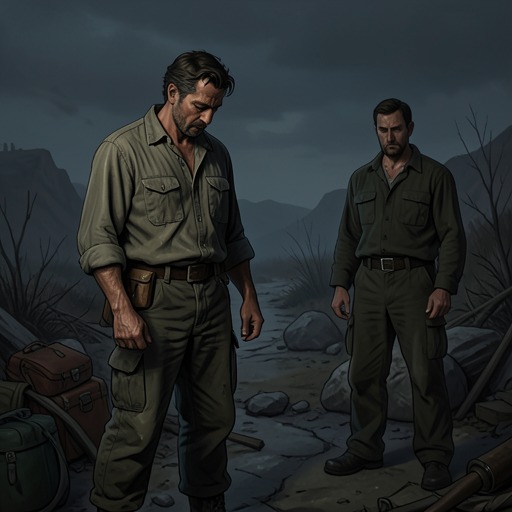
Darky Gardiner returns to a tent where twenty prisoners sleep along two lice-infested bamboo platforms. He finds Tiny Middleton occupying nearly all the space beside him, leaving Darky pressed against him beneath a bamboo pole from which water drips. Tiny has ringworm, and Darky dislikes touching him; he is tired, wants to sleep, and tries to make room. The scene places lice within an intimate, unavoidable crowding. The men share a sleeping surface, while even the small amount of space Darky needs becomes something he must negotiate with a sick companion.
The infestation belongs to a larger pattern of camp deprivation, not an isolated discomfort. The prisoners’ days are governed by railway labour, rising quotas, and diminishing food; the Speedo removes rest days and extends shifts, sometimes requiring men to work both day and night. In that setting, the bamboo slats that serve as beds also harbour lice. The distinction between work and rest is already being eroded by forced labour, and the insects make clear that physical respite is compromised as well. The camp’s hardships reach into the hours when a prisoner might otherwise recover.
Tiny Middleton’s decline and Darky’s care
Over the following weeks, Darky watches Tiny’s condition worsen. Tiny’s once imposing body diminishes; he is increasingly beaten, no longer attends to washing, and becomes covered in lice and ringworm. The lice seem to swarm over him as his strength and concern for himself recede. The narration places their spread alongside other visible signs of deterioration, but does not make the insects the cause of his decline. Rather, their presence marks how thoroughly his body and daily life have been overtaken by illness and neglect.
Darky remains beside him despite a response divided between loyalty and revulsion. He suspects that Tiny has given up, then recognizes that this judgment helps him imagine survival as a matter of personal choice. The thought cannot protect him from the same conditions. He still helps Tiny because he is his mate, and because the prisoners have come to understand that abandoning one man would mean abandoning themselves. Lice are part of the physical circumstances of that care: Darky cannot separate companionship from the realities of sharing a platform with a sick man in a camp where neither cleanliness nor privacy is readily available.
Lice in the soldiers’ daily routines
The insects also appear in a morning scene with Rooster MacNeice. As he sits on a bamboo bench and scratches himself, he crushes lice before he fully registers their bites. Sheephead Morton responds to the itching with a grim joke about the men’s ability to sleep despite the infestation. The exchange offers no relief from the conditions; instead, it shows how the prisoners turn even persistent discomfort into material for a familiar, shared joke.
The scene differs from Darky’s night beside Tiny. There, lice belong to a private struggle for a little space and sleep; here, they prompt a moment of communal dark humour. Together, the episodes show how infestation has become ordinary within camp life. It can be noticed, complained about, or laughed over, but it is not something a prisoner can simply leave behind. The small routine of scratching and crushing insects unfolds alongside Rooster’s effort to maintain his own discipline, placing an ordinary bodily nuisance within the broader pattern of endurance.
Nakamura after the war
After demobilisation, Tenji Nakamura lives amid the ruins of Tokyo, scavenging timber and selling it to a charcoal burner. His crowbar is both a practical tool and a means of self-defence; every few minutes, he uses it to crush lice he has removed from his body. Hunger, cold, and precarious work define his immediate circumstances, while a newspaper brings the further danger that Americans are seeking former camp staff suspected of war crimes. His name appears among the suspects, and the possibility of arrest intensifies his fear of being found.
The crowbar’s repeated use against lice gives the insects a new setting without making Nakamura’s postwar experience identical to captivity. In the camp, infestation is one element of collective deprivation. In Tokyo, the lice accompany a former officer who is now isolated, poor, and living by salvage. He again crushes them between his fingernail and the iron of the tool he depends on to survive. The same small action thus recurs under changed circumstances: the surrounding order has collapsed, but discomfort and the effort to manage it remain.
Recurrence and narrative significance
A final appearance comes after Nakamura enters a room where an American has been killed. While the others fall silent, lice swarm around the dead boy’s hair. Their movement briefly draws Nakamura’s attention within a scene shaped by sudden violence and immediate danger. The detail does not assign the insects a motive or make them responsible for what has happened. It carries the motif into another moment when ordinary human control has broken down.
Across these scenes, lice link the prisoners’ crowded sleeping arrangements, Tiny’s decline, the men’s daily jokes, and Nakamura’s later struggle to live among ruins. They remain a persistent feature of material circumstance rather than a symbolic explanation for every hardship. Their recurrence also complicates any clean division between wartime and aftermath: the settings and power relations change, but the narrative continues to register bodily discomfort and the small acts by which people endure it.